 Author Charles Davis takes a look at the history and culture of the beautiful area of Brittany, the ends of the earth.
Brittany is France’s Celtic fringe, bearing the same topographical relationship to the rest of the country as Cornwall does to Britain, and an emotional, political and historical link comparable to that of Scotland and Wales with England. In other words,Brittany is out on the edge of things, and for many years the rest of France was determined to keep it that way, except insofar as the peninsula was able to provide a steady supply of fish and cheap labour.
Nowadays Brittany is very much a part of modern France and is an increasingly fashionable domestic holiday destination for those who have tired of the crowded beaches and traffic jams that a traditional southbound break entails. Nonetheless, the old ways endure, Celtic culture is flourishing and is more vibrantly celebrated than ever before, and the region is highly recommended for anyone looking for an interesting break in a place that is at once French but something other, as well.
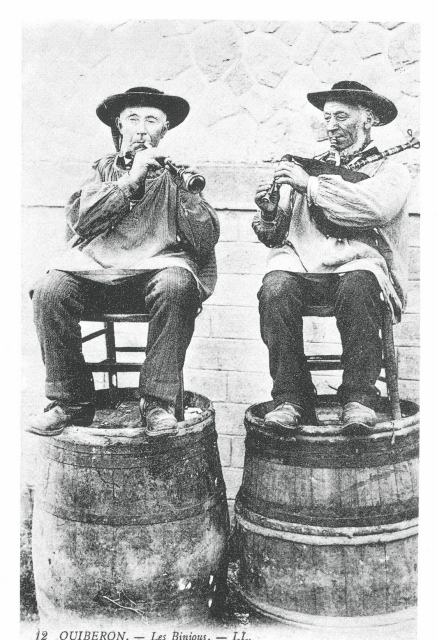 And something ‘other’ it is, too. A repository of sailors, domestic servants, gendarmes, and occasionally cannon-fodder, Brittany was in many ways France’s first colony. In the days when bourgeois French families could afford domestic servants, une bonne Bretonne was an essential piece of equipment, and even those that couldn’t afford a maid probably profited from the services of Breton labour, for the Bretons were the first and definitive migrant class, so much so that later immigrants were initially called ‘Bretons noirs’.
 Its vital role sustaining the economy notwithstanding,Brittany was traditionally treated by the nation at large as a sort of running joke, the residents of which were handy for the hands-on-work, endearing for their comical simplicity, but faintly dangerous and not exactly comme il faut. To give you an idea of the region’s reputation, the French word plouc is taken from the classic prefix of many Breton villages, and has much the same connotations as ‘bumpkin’ in English. By the same token, Breton migrants are said to have introduced a new word into French vocabulary, baragouin, meaning ‘gibberish’ or ‘jabber’, taking its derivation from Breton speaking peasants turning up in Paris demanding bread and wine, bara and guin. Meanwhile, the Breton language was so heavily censured that children caught using it in the playground were shamed by having a clog hung round their neck, which they couldn’t get rid of until they caught and denounced someone else, while public buildings like post-offices once had signs on the wall saying it was forbidden to spit on the floor or speak Breton!
 Yet despite being out on the edges and systematically marginalized,Brittany has played a pivotal role in defining France for foreign eyes. Breton sailors with a wife in every port probably did as much if not more to plant the seed of French culture abroad than any number of governmental committees. Breton explorers and privateers mapped out the emotional and geographical pattern of Imperial France. The Breton Johnnies, with their onion laden bikes, berets, stripy T-shirts and eternal maize paper fag, established for ever the stereotypical image of a Frenchman. And the most famous Frenchman in the world, Asterix the Gaul, came from the Breton village of Erquy.
Brittany is, therefore, a place of contradictions: lying at the ends of the earth and for many years deemed beyond the pale, it has been instrumental in the fashioning of French identity, at once defining and expanding frontiers, and exporting images of France around the world. Long despised by urbane sophisticates as a place in which people knew better how to park a cow than a car and dismissed by many French holidaymakers as one long wet shower, it is nowadays becoming dangerously fashionable as the urban sophisticates and holidaymakers, having endured one blistering heatwave too many, desperately scrabble about trying to buy a seaside home in Brittany. Look around when you arrive and you’ll soon understand why. This maybe the end of the earth, but it’s definitely a place you want to be.
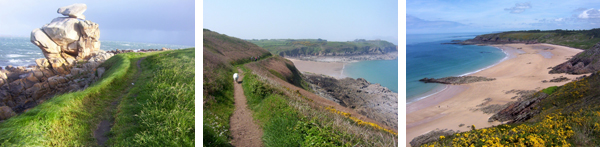
To introduce you to this fine region, Discovery Walking Guides propose two volumes, Bumping About Brittany and Walk! Brittany(North), which I will describe in more detail in future postings.